Contact Lenses
Scleral Contact Lenses in Doral, FL
What Are Scleral Lenses?
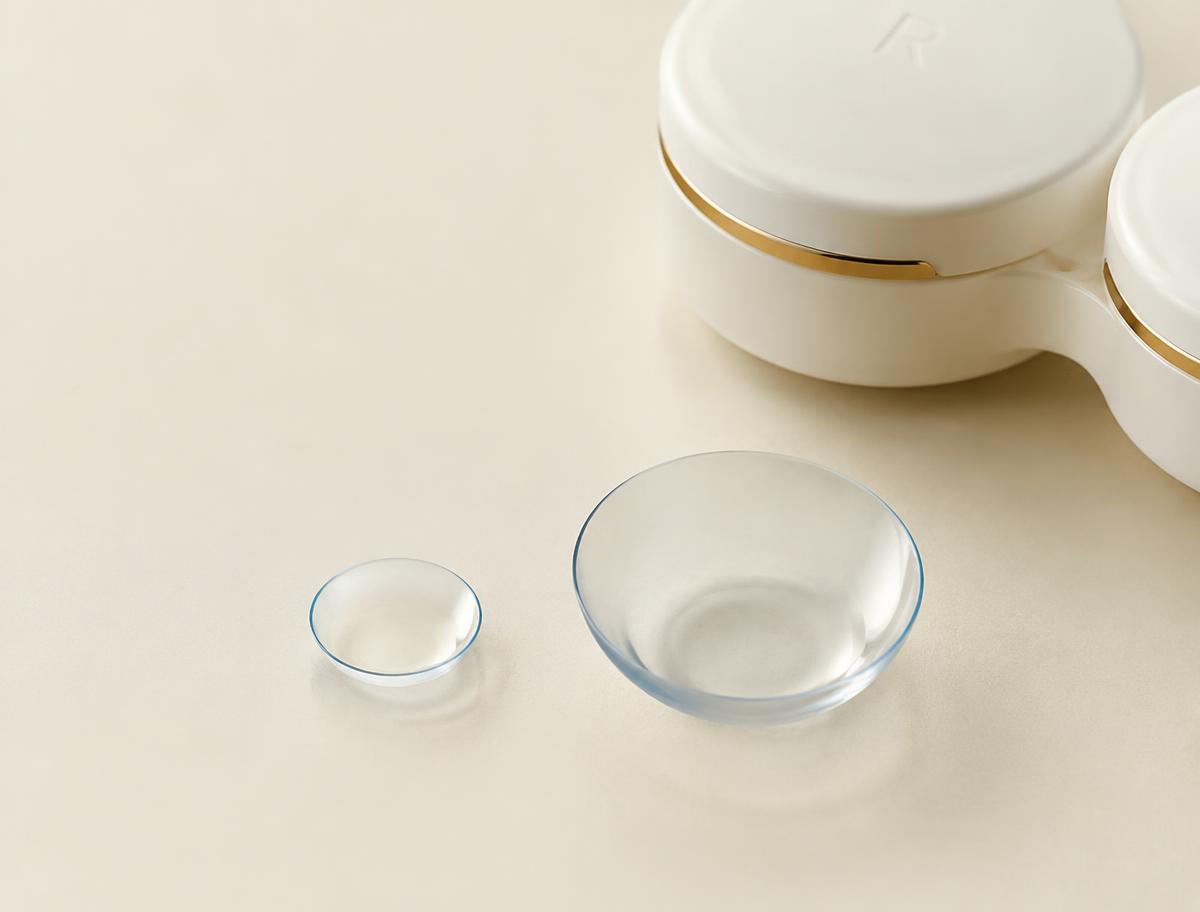
Scleral lenses are large-diameter rigid contact lenses that rest on the white of the eye (the sclera) instead of on the cornea.
Because they don't touch the cornea, they vault over it. That's why they're often considered when the cornea has an irregular shape or when other lenses don't provide comfortable, clear vision.
How Do They Work?
Before insertion, the lens is filled with sterile saline. Once on the eye, that fluid sits between the lens and the cornea.
The front surface of the lens is smooth and regular, so light enters the eye more evenly even when the cornea underneath is irregular.
- Scleral lens
- Cornea
- Space between lens and cornea
- Sclera
Who May Benefit?
These are some situations in which they're commonly considered. Whether someone is a candidate is always determined in an individual evaluation.
Scleral Lenses for Keratoconus
In keratoconus, the cone-like shape of the cornea bends light unevenly. A scleral lens covers that irregularity with a regular optical surface, which may help some people see more clearly.
Read About KeratoconusScleral Lenses and Irregular Corneas
When the corneal surface isn't even, glasses can't always provide sharp vision. The fluid under a scleral lens helps compensate for some of those irregularities.
Read About Irregular CorneasScleral Lenses After LASIK
Some people notice changes in their vision some time after refractive surgery. In certain cases, a scleral lens is one of the options reviewed during an exam.
Read About Post-LASIK EyesQuestions About Your Case?
An evaluation with Dr. Belkis Perez, OD helps determine which lens option may be right for you.
The Fitting Process
- Evaluation
- Measurements
- Initial selection
- Lens assessment
- Adjustments
- Follow-up
Every fitting is individual; the number of visits and adjustments varies by case.
What to Expect
Experiences with scleral lenses vary from person to person. At first, it's normal to need some time to learn how to insert, remove and care for them.
Follow-up visits check how the lens settles, your comfort and your vision, with adjustments made as needed.
Frequently asked questions
Related correction options
Related conditions
- KeratoconusKeratoconus is a condition in which the cornea thins and takes on a more cone-like shape, which can make vision blurry or distorted. Dr. Belkis Perez, OD evaluates each case to review vision correction options.Explore
- Corneal EctasiaCorneal ectasia describes a weakening and change in the shape of the cornea that can affect the quality of vision. Its visual management is assessed individually during an exam.Explore
- Irregular CorneasAn irregular cornea does not have an even surface, which can make sharp vision difficult with standard glasses or lenses. Specialty lenses are one of the options that may be considered.Explore
- Condition
- Need
- Correction option
- Evaluation
- Appointment
General information only. It does not replace a professional exam; the right option is determined during a visit with Dr. Belkis Perez, OD.
Wondering Whether Scleral Lenses Could Be an Option for You?
Schedule an evaluation with Dr. Belkis Perez, OD.
Schedule Your Contact Lens Fitting