Specialty contact lenses
Scleral Lenses for Keratoconus: When Are They a Good Option?
By Dr. Belkis Perez, OD · Published
If your prescription seems to change at nearly every visit, letters look like they have a “ghost” shadow, or headlights at night turn into halos and streaks, it's natural to wonder what's going on. Sometimes the cause is keratoconus, a condition in which the cornea changes shape. But not every case of blurry vision is keratoconus—only a professional exam can tell. This educational guide explains when scleral lenses may be a good option and what to expect from a specialty fitting. It is not a substitute for an evaluation by an eye care professional.
What changes with keratoconus
With keratoconus, the cornea—the clear dome at the front of the eye—thins and bulges irregularly, taking on a more cone-like profile. That irregular shape causes irregular astigmatism: light doesn't focus evenly, so images can look distorted, doubled, or surrounded by halos.
Common symptoms include blur that glasses don't fully fix, frequent prescription changes, light sensitivity, and trouble seeing at night. Diagnosis is made by a professional through a comprehensive exam and, when indicated, corneal imaging. Having keratoconus also doesn't mean everyone needs a specialty lens—it depends on how much it affects your vision.
Why glasses and soft lenses may not be enough
In mild cases, glasses or soft contact lenses may provide good enough vision. As the cornea becomes more irregular, those options tend to follow its shape and can't fully compensate for the distortion.
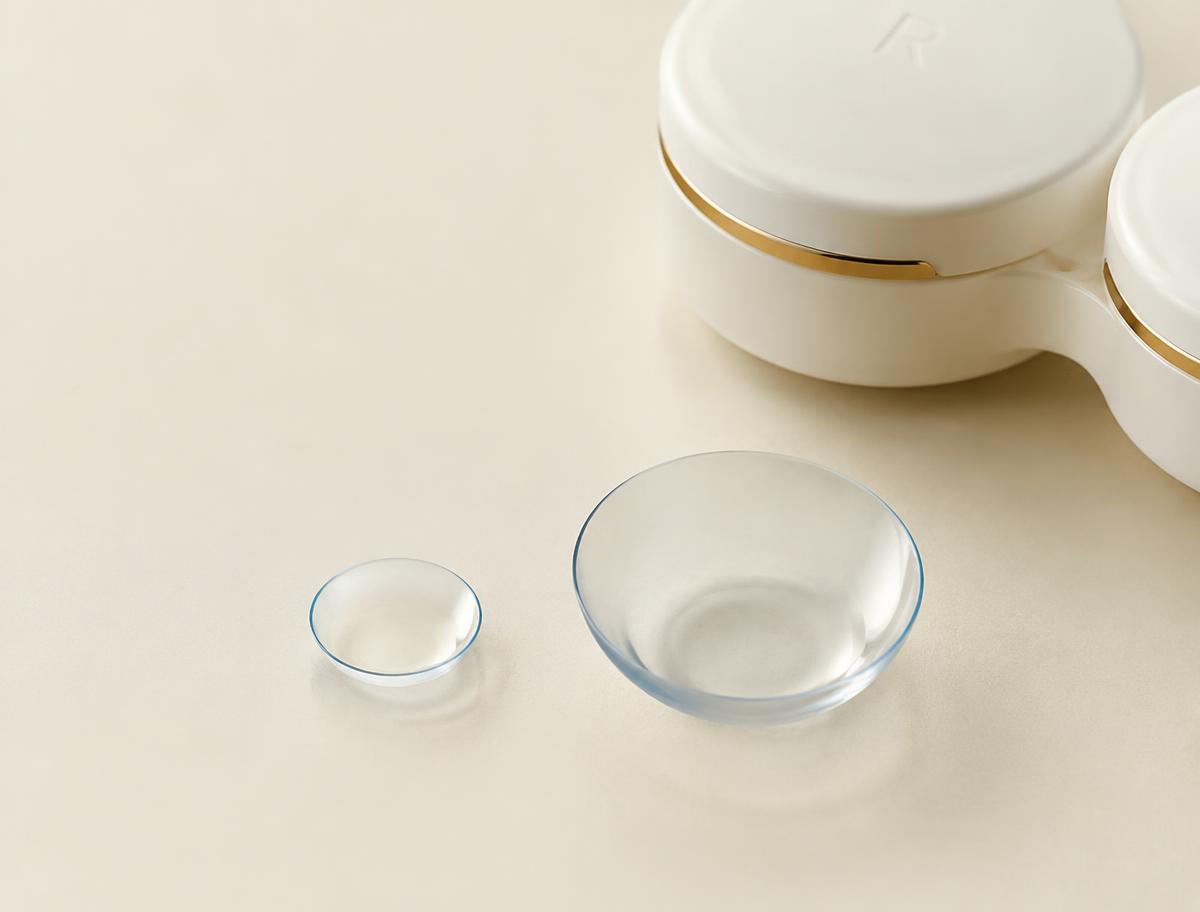
Rigid gas-permeable (RGP or GP) lenses create a regular optical surface in front of the eye. There are several families: corneal RGPs, which are small and rest on the cornea; scleral lenses, which are larger and rest on the white of the eye; and hybrids, with a rigid center and a soft skirt. There's no single “best” lens for everyone—the choice depends on your corneal shape, comfort, lifestyle, and how your eye responds during the fitting.
How scleral lenses work
A scleral lens has a larger diameter and vaults over the cornea without touching it, resting on the sclera (the white of the eye). Before it goes in, it's filled with sterile saline, which forms a fluid reservoir between the lens and the cornea.
That fluid fills in the irregularities, and the smooth front of the lens acts as a new optical surface. For many people this can improve visual quality, and the reservoir also keeps the eye's surface hydrated. Comfort varies from person to person and fit to fit.
How to know whether you may be a candidate
You may benefit from an evaluation if you've been told your cornea is irregular, if conventional contacts no longer give you clear or comfortable vision, or if small rigid lenses shift or bother you. Light sensitivity and poor night vision are also good reasons to ask.
Only after examining your eyes can a doctor decide whether a scleral lens is appropriate or whether another option fits better. Every recommendation is individual.
What a specialty fitting involves
A fitting usually begins with your visual and medical history and an evaluation of the cornea and eye surface. Then diagnostic lenses are tried and the design—vault, landing, power—is refined until the fit is right. You'll also learn how to apply, remove, and clean the lenses.
It's common to need several follow-up visits to fine-tune the result, so don't expect everything to be settled in a single appointment.
Do scleral lenses stop keratoconus?
No. Scleral lenses correct vision, but they don't change the course of the disease. Managing progression is a separate matter: corneal cross-linking is a procedure that may slow or stop progression in appropriate cases, and it's evaluated with a corneal surgeon when indicated. That's why regular checkups still matter even if you see well with your lenses.
Daily life and safety
A few basics: never use tap water to rinse or fill your lenses; use only sterile, preservative-free saline and the cleaning products you've been prescribed. Scleral lenses are normally daily wear, so don't sleep in them unless your eye doctor specifically tells you to.
If you notice pain, redness, or discomfort that doesn't go away, remove the lens and contact your eye care professional. For sudden vision loss or severe pain, seek urgent care.
November 10: World Keratoconus Day
According to the National Keratoconus Foundation, November 10 is World Keratoconus Day, a date to raise awareness of the condition and encourage people with symptoms to get evaluated. It's a good reminder to check in on your vision if something has changed.
Specialty contact lens evaluation in Doral
Dr. Belkis Perez, OD, offers corneal irregularity evaluations and scleral and rigid gas-permeable lens fittings in Doral, near Miami. You can learn more on our scleral lenses page or send an appointment request, and our team will contact you to schedule. Results vary from person to person.
Frequently asked questions
Sources
- Cleveland Clinic — Scleral Lenses
- AAO EyeNet — Diagnosis and Management of Keratoconus
- National Eye Institute (NEI) — Corneal Conditions
- National Keratoconus Foundation — World KC Day
- Optometric Management (2026) — The Keratoconus Contact Lens Toolbox
This article is general information and does not replace a professional eye exam or diagnosis.